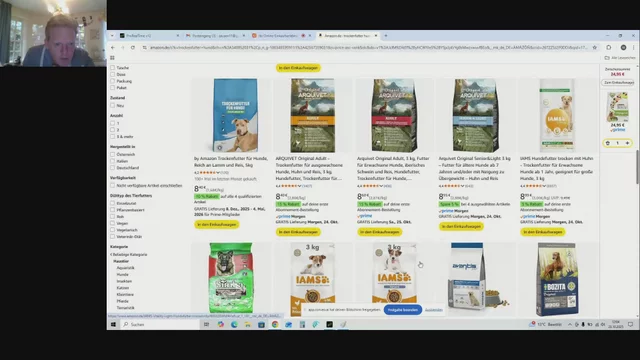
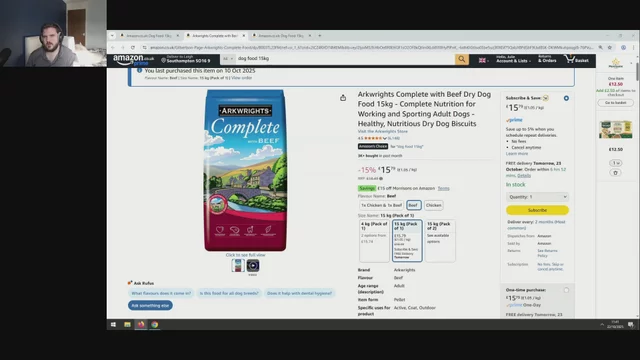
Features such as Prime delivery, subscribe-and-save, and reliable price comparisons consistently attract owners to Amazon. These conveniences reduce friction for heavy-item delivery and reordering. Optimizing similar features on other platforms could capture market share from Amazon.
Owners consistently scrutinize ingredient lists for real meat, the absence of fillers or additives, and limited grains. These priorities often drive brand selection and justify premium pricing. Brands can capitalize on this by prominently labeling 'real meat,' 'no fillers,' and 'grain-free' on packaging and digital platforms.
While high-quality ingredients are desirable, cost considerations push many owners to mid-range brands or supermarket labels that offer acceptable nutrition at lower prices. This balance between quality and affordability presents an opportunity for value-tier brands to emphasize competitive pricing alongside nutritional standards.
Most owners view their primary brand as a long-term choice, showing low willingness to try new brands. Overcoming this loyalty requires targeted strategies such as free samples, personalized promotions, or endorsements from trusted sources to change habits.
Owners emphasize the need for formulas to be palatable to their dogs, regardless of ingredient quality. Brands offering diverse flavors, sample sizes, or trial packs reduce the risk of rejection and boost loyalty. Highlighting taste tests and flavor variety can enhance initial trials and repurchases.
Customer reviews and veterinarian endorsements provide critical validation for higher-priced or unfamiliar products. Highlighting star ratings, user testimonials, and vet-backed endorsements in digital listings can increase consumer confidence and willingness to purchase.
Despite online shopping preferences, owners frequently visit supermarkets or pet stores for immediate replenishment or smaller packages. Offering click-and-collect options, stock alerts, or smaller packs can capture these in-store purchase occasions.
Participants typically begin their journey by using Amazon’s search bar with auto-suggestions to quickly find their desired brands or types, followed by the application of filters (brand, size, price, dietary) to refine options before selecting product pages. This approach enhances efficiency by minimizing browsing time. Improving the visibility and responsiveness of auto-suggestions and maintaining easy access to filter panels during scrolling can further streamline the path from landing to cart.
Products with Prime delivery badges or Subscribe & Save discounts are seen as indicators of cost savings and convenience, boosting add-to-cart rates. Conversely, lack of visible subscription options or buried discounts can lead to hesitation or abandonment. Highlighting subscription savings and delivery badges prominently throughout the shopping process can enhance cart additions and reduce abandonment.
Users experience confusion and choice overload when confronted with extensive lists of similar products in searches like 'dog food.' While they actively seek sub-categories, existing filters often fall short. Collapsible sub-filter groups or guided prompts (e.g., 'Select dog size/format first') could reduce the effort required and help users find relevant listings more quickly.
Reviews, star ratings, and badges such as Amazon’s Choice are key indicators of product quality, significantly influencing purchasing decisions. Participants often consult review filters before making final decisions. Making these trust signals more visible across grid and detail views and providing easy access to review filters will strengthen user confidence and reduce hesitation.
Shoppers focusing on health rely on consistent ingredient and nutritional details. When this information is inconsistently presented, users are forced to navigate multiple pages or seek external information, increasing cognitive load. Standardizing the presentation of nutrition details across listings will facilitate quicker and more confident decision-making.
Shoppers expect upfront visibility of price per kilogram and total costs, including shipping. When such details are missing or inconsistent, users face difficulties in comparing products, leading to potential abandonment. Implementing a 'sort by price/kg' option and clearly displaying total costs in listings will reduce confusion and expedite decisions.
Intermingled sponsored or recommended items create confusion by disrupting goal-oriented searches, sometimes repeating products. This diminishes trust and focus. Clearly segregating sponsored content or providing a toggle to hide it would help maintain user focus and enhance trust during the shopping experience.
Dog owners frequently use AI to obtain nutritional information, ingredient safety data, and diet recommendations tailored to their pet's breed, age, and health conditions. This highlights a significant opportunity for AI to provide deeper, condition-specific feeding guidance.
Dog owners use AI to quickly find and summarize relevant information, helping them narrow down their options for products and care. Brands can enhance this process by providing AI-driven comparison snapshots to streamline decision-making.
Dog owners predominantly use ChatGPT and other large language models for researching pet-related topics, significantly more than in-site recommendation engines. This trend suggests that brands and e-commerce platforms should consider integrating LLM-powered interfaces to align with user preferences for personalized, conversational guidance.
General-purpose AI tools are more widely adopted than built-in recommendation engines on e-commerce sites, indicating a potential for retailers to integrate more conversational or LLM-driven assistants within the shopping experience.
While many dog owners are sensitive to price, they rarely use AI for comparing deals. E-commerce platforms can leverage this gap by introducing AI-driven price comparison features, alongside nutritional guidance, to meet user needs.
The primary barrier to AI adoption among dog owners is the belief that they already possess sufficient knowledge. AI solutions must offer unique value in complex areas, such as chronic health issues, to overcome this reluctance.
Dog owners often validate AI-generated advice with veterinarian feedback or consumer reviews due to trust issues. To enhance AI reliance, platforms should integrate vet-reviewed content and user reviews alongside AI suggestions.
Investigate if and how dog owners use AI and digital tools (such as AI chatbots, recommendation engines, Alexa, etc.) to gather information about their pets and shop for pet food and supplies. Identify common tasks, information needs, search behavior, and the influence of AI on decision-making in pet parenting and shopping.