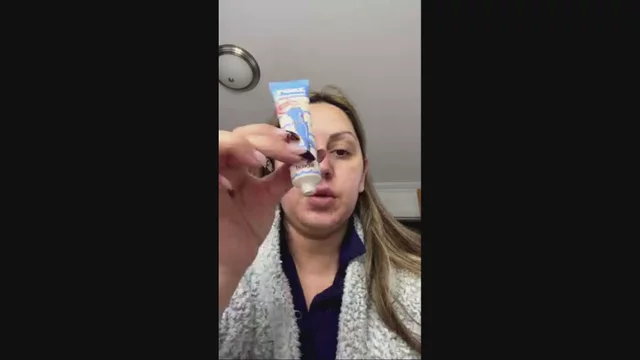
Clarify When to Use Primer vs. SPF and Specify Dry-Down Time
Facets
These facets are broadly related to the theme.
AM skincare goalsClassified by AI
The specific outcomes users aim to achieve each morning (both immediate benefits and functional goals).
Contextual variations in routineClassified by AI
Whether and how users change AM goals or steps depending on day‑to‑day context.
How they judge effectiveness (indicators)Classified by AI
Observable or perceived signals users use during the day to judge whether their AM routine is working.
Makeup interaction effectsClassified by AI
How each AM product/step impacts later makeup application and wear (pilling, grip, shine, longevity) to evaluate compatibility.
Product nameClassified by AI
The specific products participants use in their AM routine (captured by name/label) to identify what items are being applied.
Sequencing rationaleClassified by AI
Participant explanation for the order they apply products (by texture, by actives, by finish, by step category) to understand logic behind sequencing.
Stacking of activesClassified by AI
Whether participants layer actives (vitamin C, acids, retinol, AHAs/BHAs, niacinamide, etc.) and how they combine them to assess safety/routine complexity.
Wait time between stepsClassified by AI
Measured time participants wait between steps (seconds/minutes) to analyze required drying/absorption windows and stacking practices.
Wait time reasonClassified by AI
Participant explanation for why they wait a certain duration (e.g., absorption, layering actives, avoid pilling) to interpret intent behind timing.
AM skincare step that most affects makeup performanceClassified by AI
Which single morning skincare product or step has the largest impact on how makeup sits/wears. Used to identify key interactions.
Routine changes on makeup daysClassified by AI
Whether and how participants alter their AM skincare routine on days they wear makeup (quantity, product swaps, skipping steps).
Base makeup products used (relevant to skincare interaction)Classified by AI
Which base makeup items (primer, foundation, concealer, etc.) the participant uses that may interact with their AM skincare.
Makeup interaction issues observedClassified by AI
Specific problems participants notice when makeup is applied over their AM skincare (what goes wrong with makeup performance).
AM routine steps skipped or combinedClassified by AI
Which specific morning routine steps participants omit or merge; helps identify common shortcuts and which product types are affected.
In-the-moment decision rules (rules of thumb)Classified by AI
How participants decide on-the-spot which steps to skip or combine — explicit heuristics or rules of thumb they rely on.
Quotes


“So I would go in with the Benefit Porefessional. This is the hydrating one. I would use about maybe a little bit more that amount. Rub it in with my fingers. Apply it into my poor t zone area, kind of pat instead of swiping so that my pores are nice and smooth, and then I'll let this dry.”

“If I don't wait long enough for my products to sink into my skin, there will be pilling or patchiness. I noticed that I do pill around my eyes if I wear eye cream, and I don't let it sit long enough. But I think that also depends on the product because there are some or there is one specific eye cream that I've used before where it has made my concealer a pill.”



“I think for me, it's a matter of, you know, fanning it as much as I can, which I really didn't do for the sake of this video. I I typically would do a little bit more fanning if I could. And I typically wait about two minutes, a minute or two, to make sure that the next step of the makeup can go on smoothly. So when it feels less tacky to me, that's when I feel I'm ready to move on.”

“It's really based on application. Primer just feels very different from this sort of gel based sunscreen. I don't love the feeling. I but it's it's what makes a primer a primer. It just kinda feels weirdly thick and silky so that the foundation or the makeup kind of applies smoothly on top of it. And I don't love that texture or that feeling, but, again, that's the that's what primer is supposed to feel like.”

“Definitely primer, especially ones that, like, prep the skin to apply the foundation on top of it. My favorite is pore filling primer just because I do have bigger pores and, like, you know, lines. I feel like by adding the pore filling primer, it just creates, like, a clean slate and a smooth base for all of the foundation to go on.”
“On makeup days, sometimes there's a bit of shine issues just because I feel like the hyaluronic acid and sometimes a sunscreen, they have a bit of a shininess or a sheen to it. And I like to have my makeup very matte. So I follow-up typically with a primer, particularly in my t zones to make sure that there's not a lot of shine that comes through.”
“For sure, my sunscreen is the step that makes the biggest difference. It smooths out my skin, gives that slightly dewy hydrated base that helps my makeup glide on evenly and stay put all day. I think of it like built in primer that also protects my skin. So everything I layer on top of just on top of that just performs better.”
“So I mentioned this when I was recording my actual routine of placing the product that is now on my face, but I will wait between the dew drops and the serum because I feel like the dew drops are what leave me most moist and dries the slowest before I apply the serum. For every other step, I mostly just apply immediately except for the SPF, which I wear after my moisturizer, which I will wait five minutes between the moisturizer and applying sun balm, but I didn't do that for the sake of this interview brevity.”


“If I'm doing a full face, I tend to use a lighter moisturizer, but then I go heavier with primer, like actual primer, makeup primer. I will focus on, like, mattifying the face and, like, kinda filling in the pores, like a pore filling primer. Yeah. Yeah. On full makeup days, I do less skincare, more makeup priming.”

“Well, my moisturizer and my sunscreen doesn't, actually have so much effect on how much grip my makeup has. What actually plays a role in that is my primer. So I make sure I use a primer and an anti sweat cream that makes sure that every sweat and everything is just locked into my skin and can come off of my makeup. So my moisturizer and sunscreen does not affect the grip of my makeup.”

“And then I go in with this product here. This is the e. F. Hydrating Face Primer. And, again, less is more. Sorry. I dropped the cap. Less is more. So I just put some right here on my forehead, some right here, some right here. And I make it a point to rub that all the way in my face so that the makeup can stay on and grip properly. I try not to do too much on the eyes, especially trying to be safe about my eyes, and then I let that primer dry. So, again, fanning myself or finding a notebook or something, a piece of paper so that this can dry. So that takes just a moment or so. So very minimal amounts. I think it's very important. Like I said, less is more. I know some people think you need a lot of product, but you really don't need a lot of product.”
“Yeah. I definitely wanna make sure that, like, my skin is feeling smooth and not getting, like, stuck when I'm going across it. So, especially when I'm applying primer as a step, that's, like, one of them. It's, If the primer doesn't feel like it's touched all of my skin or my skin doesn't feel moist in some areas, I will grab more moisturizer if my skin is especially dry, maybe I need a little bit more. It's just kind of like the way my skin feels and if it feels moist and ready for the next step.”